In our first reading we hear King Solomon asking God for the gift of wisdom – a gift he would treasure more than gold or silver – a gift that would help him be a great and just king. What Solomon was really asking for was the gift, the ability to keep things in perspective, to have the right priorities in his life.
Archive for the ‘Homily’ Category
Homily – 11 October
Sunday, October 11th, 2009Homily – October 4th
Sunday, October 4th, 2009Genesis 2.7ab, 8b, 18-24
It is not good for man to be alone. This story of creation we just heard is one of two creation stories, each one having it own message. The basic message of this version of creation is that it is not good for man to be alone. We live our lives in relationships. To quote the Dalai Lama: “we come into this world as a result of others’ actions. We survive here in dependence on others, whether we like it or not there is hardly a moment in our lives when we do not benefit from others activities. It is hardly surprising that most of our happiness arises in the context of our relationship with others.” (more…)
Homily – 27 September
Tuesday, September 29th, 2009Mark 9:38-43,45,47-48
Back in the 80’s I went back to school. I started a doctoral program in ministry. It was an ecumenical course; there were twelve of us from six different denominations. It took me five years to finish. On one occasion Cardinal Carter was visiting St. Gabriel’s. He asked me if I’d learned anything by going back to school. I said, “Yes your eminence I have. I’ve learned that the Roman Catholic Church does not have a corner on idiocy.” He was not amused. But listening to the stories the ministers of other denominations told about the struggles and conflicts in their own congregations I realized there is no such thing as a perfect parish, a perfect congregation or perfect leader.
Reading today’s scripture that conversation with the Cardinal came back to me. Just as we don’t have a corner on idiocy neither do we have a corner on either the Holy Spirit or the Spirit’s gifts. We are all gifted with the Holy Spirit, as was Moses and the others. We don’t own the Spirit, we don’t control the Spirit. (more…)
Homily – 20 September
Tuesday, September 29th, 2009Last Monday the church celebrated the Feast of the Exaltation of the Cross. The epistle of the Mass was from St. Paul’s letter to the Philippians in which St. Paul called the Philippians to have that mind in them which was also in Christ Jesus, Who though He was by nature God, did not regard equality with God as something to be exploited but emptied himself, taking the form of a slave, being born in human likeness. And being found in human form, he humbled himself and became obedient on to the point of death, even death on the cross.
It is this struggle of self emptying, not putting ourselves above others, not asking ‘what’s in this for me’, that Jesus puts before us to today. In last Sunday’s gospel Jesus accepted Peter’s acknowledgement that He was the Christ. But then He went on to tell Peter the full dimension of what being the Christ entails, “the Christ must undergo great suffering, be rejected by the elders, chief priests and scribes and eventually be killed. Peter couldn’t get his head around such a possibility and tries to talk Jesus out of it all. Calling Peter ‘Satan’, Jesus tells him, “you are thinking not as God does but as humans do.”
We find this thinking to be true in today’s gospel. Whether they didn’t want to hear it or couldn’t grasp it, the apostles still failed to understand what being the Christ would mean. As they made their way to Capernaum instead of trying to figure out what Jesus was trying to tell them they spent the time arguing about who would be the leader if anything should happen to Jesus. Jesus is telling them about His future death and they’re planning on their future rankings.
The need for power and prestige is part of all of us – we all want to be recognized, appreciated, lead the parade – we want to be number one. Ambition can be a force in our lives. On one occasion Jesus confronted this mentality when He heard the apostles were arguing who was first among them. He had to tell them “the Son of man came to serve, not to be served and to give his life as a ransom for many.” He even had to deal with the mother of James and John who wanted a special place for her sons in his kingdom.
Jesus wanted his apostles to see themselves as leaders who serve instead of seeking to be served, to rid themselves of pride and haughtiness and not to lord their authority over others. In the helpless powerless child the disciples were to find the simplicity that would enable them to see beyond their selfish ambition and understand the manner of life to which Jesus was calling them.
I think at one time or another we’ve all suffered from the abuse of power. Haven’t we been upset when, dealing with a professional person – a doctor, lawyer, a teacher, a priest – we’ve been treated like a moron. Haven’t we been annoyed, even angered when the professional we are seeing thinks himself too busy to take the time to explain our problem. The message is “just take my word for it.”
We’ve seen the abuse of authority in so many areas of life in the recent past; in the church, government, banking and investments, labor and management. In all these areas people have forgotten they are meant to serve, not to be served, not exploit their position.
As we continue to celebrate this Mass we can pray for ourselves and for each other, that if we are in a position of authority, be it as priest, parent, or in our place of work, we try to follow the example of Jesus, Who did not exploit His equality with God but emptied Himself becoming as we all are and gave His life in service to all of us.
Homily – 13 September
Sunday, September 13th, 2009Mark 8:27-35
The happening at Caesarea Philippi is told in the gospels of Matthew, Mark and Luke. It was an important event in the relationship Jesus was developing with the Apostles. Jesus asked them for a bit of feedback: “Who do people say I am?” But more importantly He wanted to know who He was to them. “Who do you say I am?” Peter takes it upon himself to answer for all. “You are the Christ”
In Matthew’s telling of this event he extends Peter’s answer: “You are the Christ the Son of the living God.” Jesus tells Peter ‘flesh and blood did not reveal this to you but my Father in heaven.” In other words, Peter you did not come to this understanding of Me on your own; this is a gift from My Father.
Now Jesus goes on to tell the apostles, ‘but there’s more to Me that you have to understand.’ He tries to teach them that His future will involve hatred, hostility, betrayal, suffering and death and then resurrection. Jesus is telling them the truth, the whole truth and nothing but the truth about Himself. It was a truth with which Peter could not cope: “This must never happen to you Lord.” In Luke’s gospel Jesus calls Peter, Satan. In Matthew’s gospel, Jesus calls Peter the rock on which the church will be built. This is the whole truth about Peter, a rock with fault lines and Jesus accepts the whole Peter, with all his faults and all his strengths just as He wants Peter to accept the whole Jesus.
When Jesus talks about taking up the cross He is not talking about illness or disease, there is nothing particularly Christian about cancer or Alzheimer’s or a broken hip or heart attack. These can happen to anyone. The cross He is referring to is the type of suffering that is likely to befall a person for being His follower, the negative consequences that can happen when a person really tries to live her/his live modeled on Jesus. This cross is the cost of discipleship.
Remember the song, ‘All of me, why not take all of me”? That’s what today’s gospel is all about; we have to take the whole Jesus, the whole Christ; not just the Christ of signs and wonders, the Christ who gave sight to the blind, speech to the speechless, hearing to the deaf. Not just the Christ Who cured lepers and even raised the dead, not just the Christ of the Transfiguration. The whole Christ involves the Christ of Gethsemane, the Christ betrayed and abandoned by His friends, the Christ humiliated before Pilate, the Christ rejected by the crowd, the Christ crucified on Calvary – the Christ glorified in His resurrection.
Jesus invites us to accept the whole of Him in the living of our lives and be willing to pay the cost of discipleship.
I was on a TV program last year and the subject was on “what is happiness” I suggested that if we want to be happy we can pray and live the prayer of St. Francis which captures the teaching of today’s gospel:
Make me a channel of your peace – where there is hatred let me sow love – where there is injury pardon, where there is doubt faith, where there is despair, hope – where there is darkness, light – where there is sadness, joy.
Divine Master, grant that I may not seek so much to be consoled as to console – to be understood as to understand. – to be loved as to love.
It is in giving we receive, in pardoning we are pardoned and in dying we are born to eternal life.
The gospel and the Prayer of St. Francis call us to place the common good and Christ at the centre of our lives and not our own needs and desires. It is our free choice to live a life imitating as best we can Jesus, Who loved us and gave His life for us.
As we continue to celebrate the Eucharist in which Christ gave Himself totally for us and to us we can pray for ourselves and for each other that we be graced to accept and imitate the whole Christ, the Christ Who suffered and the Christ Who is glorified, the Christ Who is with us in all our sorrows and in all our joys.
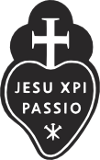 Founded by St. Paul of the Cross, every Passionist takes a special vow to spend his or her energies in promoting remembrance of the sufferings of Jesus, the memory of the Cross, and reflection of the meaning of the Cross for the world.