Archive for the ‘Homily’ Category

homily – November 12

Sunday, November 12th, 2006

Mark 12:38-44

It will help to understand today’s short gospel if we put it in context. Jesus came to Jerusalem in triumph – the crowds greeted Him with Hosannas, spreading branches on the road – calling out, blessed is He Who comes in the name of the Lord. It’s what we call Palm Sunday, the beginning of Holy Week. In the days between this triumph and the tragedy of Good Friday, Jesus spent a lot of time in the temple. He drove out the money changers and reminded the people the Temple was a place of prayer not a market place. The priests and scribes and Pharisees challenged Him, ‘by what authority do you do these things.’ In Mark’s gospel we read of them confronting Jesus in different ways – the Pharisees wanted to know if it was lawful to pay taxes to Caesar – the Sadducees challenged Him on the resurrection of the dead – the lawyers wanted to know if it was lawful to divorce – all this was building up to the moment when the Chief Priest would decide, ‘it is better that one man die than that the whole nation should perish.’

Jesus joins that long line of prophets who exposed the false piety and corrupt practices of religious leaders who took advantage of their positions to exploit the poor. He goes after the Scribes for devouring the houses of widows. From what I’ve read, it seems the Scribes were given a kind of executive care for the resources of widows and were stealing from the very ones they were supposed to be helping. Much like some lawyers today who are caught embezzling estates they were meant to manage.

One consideration we can give to today’s gospel is that maybe Jesus is attacking the very religious system that takes money from a person like this widow and uses it to support people like the scribes who go around in their long robes – a dress code that sets them apart from poor peasants who make up the majority of the population.

Today’s gospel is often used to encourage people to donate to the church. Many denominations call this Stewardship Sunday. Are we good stewards of the funds we collect? Are we using our resources to further the good works of the gospel?

I remember visiting a priest up north who had just taken over a parish and was anxious to make all things new, beginning with the rectory, which he referred to as early muskoka boat house. Showing me around his refurbished home we came to his ensuite which had a Jacuzzi with gold faucets. I mentioned in passing that it was priests like him that caused the French Revolution. That was the end of the tour.

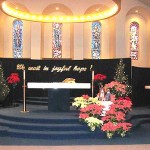
As Passionists, I think we have practiced good stewardship in using our resources here at St. Gabriel’s. The decision to build this new church which is energy efficient and environmentally friendly came about as we looked at the physical condition of the old church, which was impossible to heat and had so much wasted space. We considered as well, the planned development of the whole neighbourhood – the plan to put 10,000 units on the south side of Sheppard between Bayview and Leslie plus other developments in the area. We decided to replace rather than waste your money trying to repair the old church. You make these kinds of decisions yourself when you look at your automobile and ask the question, “should I put more money into this heap or buy a new car?”

With the money realized from the sale of our property and the help of all those who were part of our Heritage Program we now enjoy this beautiful church. No money from the sale of our property went off to some bishop in the States as our present local councilor maintained in the local press.

Stewardship has to do with what we do with the resources of the parish. We use these resources to hire a parish manager and secretary, a maintaince staff, and we use these resources too in hiring qualified people to provide the parish with the important ministry of adult education, education in the faith and preparing people to be received into the church, preparing children for the sacraments and education that springs from the very nature of our new church – and awareness of and sensitivity to our relationship with the rest of God’s good creation. The greening of this sacred space is meant to foster the greening of those who gather here.

Another thought about today’s gospel and the widow’s mite. Jesus had nothing in common with the opulence of the temple, the pomposity and superficiality of the religious leaders who challenged Him. Of all the religious and pious people He met in the temple that day, the widow was the only one with whom He could identify. In a matter of days He, like her, would be asked to give up His whole livelihood – He would be asked to give His life to God, holding nothing back – He would imitate the widow’s radical trust in Go’s care for her – His last words would imitate her total giving when she dropped her two pennies into the box – words, spoken in trust of God’s presence and care – “into Your hands I commend My spirit”.

In continuing to celebrate this Mass I want to thank you for your great support of the parish and promise you that with the guidance of the parish financial committee we will use our resources wisely – may we all see in this widow, who gives all she has as an example of generosity – may we follow her example by being generous in any way we can – to God and to all those who come into our lives.



homily – November 5

Sunday, November 5th, 2006

Mark 12:28b-34

In our first reading from the book of Deuteronomy and in our gospel from Mark we are brought right back to basics – we are to love God totally – heart, mind and soul – and we are to love others as we love ourselves. No other commandment is greater than these. Until Jesus, the night before He died, gave us a new commandment: love one another as I have loved you.

Jesus not only talked the talk of love, He walked the walk of love – a walk we call the via dolorosa – through the streets of Jerusalem to Calvary where He died on the cross for us and showed us how to love. Love one another as I have loved you. His was a life giving love – He was crushed for our offences and by His wounds we are healed. As one of the prayers of the church prays – through the obedience of Jesus, your servant and your son, you raised a fallen world. God was in Christ, reconciling the world to Himself.

Love one another as I have loved you. How often have we heard those challenging, demanding words? How well do we live them?

Christ’s love for us was a life giving, healing and forgiving love – a love that calls us to move beyond our own self interests, self satisfaction to a true concern for good of others, a love that calls others to life and growth and maturity.

One of the saints said that when life is over we will be judged by love alone – this echoes the gospel of Matthew in Jesus’ one description of judgment – I was hungry, thirsty, naked and alone and you were there for me – come to me, or – I was hungry, thirsty, naked and alone and you couldn’t have cared less – depart from me. When our lives are over we will be judged by love alone – we will be judged on how well we lived the great commandment – love one another as I have loved you.

How will that judgment be? We have the vivid images of it in scripture and art – just think of the ceiling of the Sistine Chapel. I remember how we were told in catechism classes how we would stand before God Who held in His hands a book that recorded our lives. Every sin we ever committed would be told to everyone who ever lived and then will either be called to heaven or sent to hell. But most times we were neither holy enough to go straight to heaven, nor bad enough to go to hell so we would spend some time in purgatory to be purified.

Purgatory, that’s a word we don’t hear too often anymore.

This is the month of the holy souls – we begin the month celebrating all those saints, those good people who touch and enriched our lives with the feast of All Saints. The next day we have All Souls Day on which we remember and pray for all those souls in purgatory. In the book of Maccabees we are told – it is a holy and wholesome thought to pray for the death, that they may be loosed from their sins.

Praying for the dead is an ancient teaching of the faith – as can be seen from art in the catacombs and the teachings of the fathers of the church as far back as the fourth century.

St. Thomas Aquinas teaches that when we die basically we judge ourselves. For the first time in our existence we are graced with an understanding of God’s love for us – something we couldn’t totally grasped wrapped in our earthly existence. We see too, in a way that is free from all self deception just how much or how little we responded to that love – how fully we lived the new commandment, ‘love one another as I have loved you.’ We come face to face with the ‘unfinished businesses of our lives. We know we’ve left behind unhealed relationships, wrongs that were never righted, good deeds left undone, love and thanks never spoken. We realize all this is so because we did not live the new commandment. Seeing our stinginess, our self centeredness we know we are unfit, unsuited for union with God. We are not ready for such an eternity. In that comprehension we want to rid ourselves, purge ourselves of our selfishness, our self love. And that desire to be purged, eradicated of all attitudes and actions of our past life that held us back from loving others as we were loved – is our purgatory. It’s a cleansing, a purification we willing embrace because it removes all those barriers that keep us from life with God. Maybe the prayer of the souls in purgatory is – thy kingdom come – thy kingdom come to all those aspects of my life in which I failed to love others as You loved me.

We can’t get into days and months and years spent in purgatory – purgatory is beyond time but it is not beyond our prayers. So it is a holy and wholesome thought to pray for the dead – for those not yet in full communion with God.

We can continue to celebrate this Mass remembering, it is a good and wholesome thought to pray for the dead that they may be loosed from their sins – and praying for ourselves and each other that we all be graced to strive to live the new commandment, the commandment on which our lives will be judged – love one another as I have loved you.


homily – October 29

Sunday, October 29th, 2006

Mark 10:46-52

Lord let me see again. We can just imagine the intensity of that plea of Wartimes – oh to see again – to see the face of those he loved, to see the blue sky, fig trees in bloom, to see the familiar homes and streets of Jericho. Please, please release from this darkness – let me see again.

Someone has written that people who have their sight restored after some period of blindness have their own share of difficulties. It’s a bit like getting a new hearing aid that works – a person starts hearing all kinds of new sounds and noises – it can be disconcerting, confusing – its takes a bit of getting used to. It’s the same with regaining one’s sight – a person can be bombarded with all kinds of new sensations – too much, too soon. Again, it takes getting used to.

Often we use this miracle of new sight as an example of being blessed with new insight, a deeper comprehension and appreciation of things. We can start with our faith – let me see again, let me grasp in a deeper way the wonder that God has embraced me in love, that Christ thought enough of me He was willing to die for me – that though my sins are as red as crimson they shall be as white as snow. Let me see again what this very Eucharist we celebrate is all about – that here and now we make present again the Passion, Death and Resurrection of Jesus – This is My Body, this is My Blood given for you – take and eat, take and drink.

But this new sight makes its own demands on us and how we live our faith in word and deed. With his new gotten sight Bartimaeus left his old way of living and followed Christ along the way – he had to make great adjustments in his life with that decision.

Think of the new sight gifted to a man or woman who comes to see that his/her life is beyond control and they need to hand their life over to a higher power – that new sight is costly, demanding that life be lived with the help of others one day at a time for the rest of their lives.

Think for a moment what new sight cost Paul of Tarsus. Paul was a very observant Pharisee – faithful to the law and prophets. He had no truck with those who followed Jesus – he saw them as deserters from their faith. He was out to crush this new movement in the Jewish faith. Then he had his famous encounter with Jesus on the road to Damascus. He was struck blind – a symbol of his own inner blindness. But when the scales fell from his eyes – when Paul saw again he knew Jesus not as a heretic but as a savior, as the messiah. He began to preach Jesus as the messiah and was himself seen as a traitor by his fellow Jews – Paul’s new sight caused him to be driven out of synagogues – he was beaten and stoned and imprisoned – Paul’s new sight cost him his life.

There’s that saying, be careful what you ask you, you may get it. If we have the boldness of Bartimaeus and really ask ‘Lord let me see again, ‘Lord let me see, let me understand the meaning of my relationship with you, let me comprehend the full meaning of my call to grow to full maturity in Christ – we would be in for a shock. We might back away from the demands of such new sight – a new sight that demands we see men and women of other faiths and cultures and life styles with a greater openness and respect we ever offered before. Our new sight might compel us to see the homeless and the street people of Toronto with a compassion we never felt before and inspire us to do something for them. Our new sight into our relationship with Christ might call us to a deeper appreciation of ourselves as good people, people blessed with many blessings, a wounded people loved and healed.

I like to think that our new church offers us new sight as to what church is all about – it’s about people – its about our oneness with God’s good creation – its about the importance of the table of the altar at which we celebrate a sacrifice of thanks giving – its about this table of the word from which we are nourished with the life giving words of scripture. Its about Christ present in the Blessed Sacrament and His gracious invitation ‘ come to me all you who labor and find life burdensome and I will refresh you.’

As we continue this Mass and going back to our opening prayer – we can pray for ourselves and for each other that we have the boldness of Bartimaeus and ask for sight – a sight that will show us how to do with loving hearts what God asks of us and come to share the life He promises.


homily – October 22

Sunday, October 22nd, 2006

World Mission Sunday

From Monday til Thursday of this past week I was at the annual priest’s seminar held up at Nottawasaga Inn. What I got most out of this meeting was meeting so many priests from so many different countries serving here in the Archdiocese. We were reminded that the Mass is celebrated in 37 different languages every Sunday here in Toronto.

At my group table I met a young priest from Ethiopia who is the chaplain at Toronto Western and I met a priest from Poland who spent 15 years in Brazil and is now working in a Portuguese parish in the city. Talk about mobility.

Today is Mission Sunday – it’s a day on which we are asked to support the missionary activities of the church and to pray for those men and women who leave family and country to preach the gospel in other lands. I was preaching a mission in Florida and the pastor was what was known as an FBI – foreign born Irish. He told me, ‘ sure I came to this country 25 years ago to do good – and I’ve done well.’

For years Canada did a great job sending missionaries to other countries – we still have the Scarboro Foreign Mission Society and Our Lady’s Missionaries – the Maryknoll Fathers were famous in the States.

The Passionists were founded in 1745 and before our founder St. Paul of the Cross died in 1775 he’d sent missionaries to Bulgaria and even though we were small in numbers Passionist Missionaries were sent to England and the States by 1852. The American Passionists sent men to Hunan Province in Northern China in 1920. The Communists expelled them all in 1954 so we started new mission fields on the island of Mindanao in the Philippines and then in Jamaica, West Indies, in Haiti and Honduras.

From the very beginning the church was missionary – Jesus sent his disciples out, two by two, to all the towns and villages He was about to enter.

In past years Canada sent missionaries out to other countries. Today Canada is receiving missionaries from other countries. If it were not for the many priests from many lands serving so many parishes in the Archdiocese of Toronto we would be in dire straights. The truth of the matter is, we are now on the receiving end of things. I hear people complain about some of these foreign priests – how difficult it is to understand them, they have such heavy accents. I think of what the poor people in China had to put up with as our American missionaries struggled trying to preach in Chinese – what goes around comes around. Again, if it wasn’t for so many priests from so many different counties coming here – the church in Toronto would be in trouble.

The Passionists just finished a general chapter in Rome. One of the movements in our community is what we’ve called ‘restructuring’ the congregation. Our Father General, who will be here for the dedication of our new church in November, wants to move us from being too locally conscious – too territorial – to being more universal – more available to the needs of the community and church throughout the world. Vocations are scarce in Europe and North American – they are many in the Philippines, India, Indonesia, Africa – we have to spread Passionist manpower around more evenly.

On this mission Sunday we are asked to support the missionary works of the church financially and spiritually. We can pray for those men and women from Canada who have gone to serve in other lands – and we can pray for those priests who leave family and homeland and come to Canada to minister to us – learning English, getting used to our food, our climate, and our ways. It’s not easy for them and they need our prayers and patience. We are blessed to have them.

We say that the church is a missionary church – sent to preach the good news of Jesus Christ. But you good people are the church – we are all meant to preach the gospel – by the very lives we live. I love that teaching of St. Francis of Assisi – preach the gospel at all times and when necessary, use words. We can all be missionaries, witnesses to our own faith, by the lives we live, the work we do, the prayers we pray and the service we give – giving witness to our faith in Jesus Christ by what we say and what we do. Let us pray for each other that we be so.


homily – October 15

Sunday, October 15th, 2006

Mark 10:17-30

In the Information Brochure we give out to new parishioners, there is the story of the rabbi who responded to a group of young people who had been badmouthing their religious upbringing – claiming they had been dragged to church and brainwashed.

For the rabbi religion involved three things – belonging, believing and becoming. Belonging in the sense that a person knows they are welcome in a community and that they have a sense of personal ownership, responsibility and commitment to the well being of all the people in the community of faith. Believing in the sense that supported by the faith example of others in the community they grow in their own personal relationship with God. Becoming, in the sense that a person seeks to grow to a full maturity in Christ and is willing to take ownership and responsibility for the adult decisions in their lives.

The rabbi felt that most religions fail people when they deny them the opportunity to grow.

One of the teachings we can take from today’s demanding gospel is that Jesus offered this good young man the opportunity to grow. This enthusiastic, faithful young man has kept all the commandments from his youth – he was truly observant of the law, faithful to the rituals, kept the fasts and feasts. Here’s a good young person who thought he had it all together.

Mark tells us that Jesus looked at him, loved him and in that love offered him more – a challenge, chance to grow. Un-clutter your life. “Go sell what you have, give it to the poor and follow me, and I’ll show a way to live and love you could never have imagined.”

We have no idea what this young man expected of Jesus but he was stunned by what Jesus said – sell what you have, give to the poor – break out of your observant comfort zone – overcome your smugness at keeping the laws – Get beyond keeping familiar rules and rote obligations – let go of these security blankets – take a chance, a leap of faith and cast your lot with me.

What a shock, what a crazy idea. No way, he was not a gambling man – he wasn’t about to let go of his security, the certainties of his life – he had too much going for him.

Then we hear those tragic words – he went away sad, because he had many possessions – possessions that basically possess him.

He may have been wealthy but he wasn’t wise – wise in the sense of having a living sense of what things are and what they are not. He was wealthy but not wise in the sense of knowing what things in life really matter.

The rest of the words of Jesus are not against money and people who have money. No matter what we have the fact is – people and their needs come before the satisfaction we have over owning many things. We are our brothers and sisters keepers – whatever you do to one of these the least of my brothers and sisters you do to me. In the novel Angela’s Ashes no matter how little poor families had for themselves they always managed to find something to share with those who had less.

It’s providential that we hear this gospel this weekend – Sunday marks the 14th United Nations International Day for the Eradication of Poverty – Seventeen years ago the House of Commons unanimously resolved to elimate poverty among Canadian children by the year 2000. Great rhetoric – the reality is one in six Canadian children live in poverty – the reality is 770,000 Canadians rely on food banks, 40 percent of them are children.

The developed countries are 10% of the world population yet we consume 80% of the world’s resources – a city such as ours should not have people living and sleeping on the streets.

Like the astounded disciples we too ask, who can be saved? The answer is the same for the rich and the poor – those whose love for God and for their fellow human beings expresses itself in an eagerness to do good for others.

As we continue our Mass we can pray for ourselves and for each other that we take the time to pray for ‘understanding’ and that wisdom be given to each of us, a wisdom that keeps us in touch with reality – a wisdom that keeps us aware of what really matters, what thing are really important, a wisdom that makes us always willing to do good for others.